NHS England Wants to Hear From Learning Disability and Neurodiversity Clinicians on All Age Continuing Care

NHS England is reshaping All Age Continuing Care (AACC), the umbrella term covering both NHS Continuing Healthcare for adults and Children and Young People’s Continuing Care. A recent meeting on this work flagged a gap: learning disability and neurodivergent clinicians are underrepresented in the conversation. 

Beacon CHC is hosting a survey on NHS England’s behalf, open to commissioners, providers, people with lived experience, their carers, and anyone else with a stake in AACC. It explores the challenges people currently face within the system and asks for views on how care might be described, commissioned, and funded more consistently in future. Part of the engagement looks at whether “currencies,” a way of grouping people with similar care needs into clinically meaningful categories, could help make care more comparable across systems. NHS England has confirmed this work will not change who is eligible for NHS Continuing Healthcare or impose a single national model regardless of local need.

The survey takes around 30 minutes in total, including 15 minutes to read the background information first. It closes on 18 September.

https://www.beaconchc.co.uk/we-want-to-hear-your-views-on-the-future-of-all-age-continuing-care

If you work with, support, or represent people with learning disabilities or who are neurodivergent, please take the time to respond, and share it within your own teams and networks. Feedback gathered through this engagement will feed into a public consultation later this year.
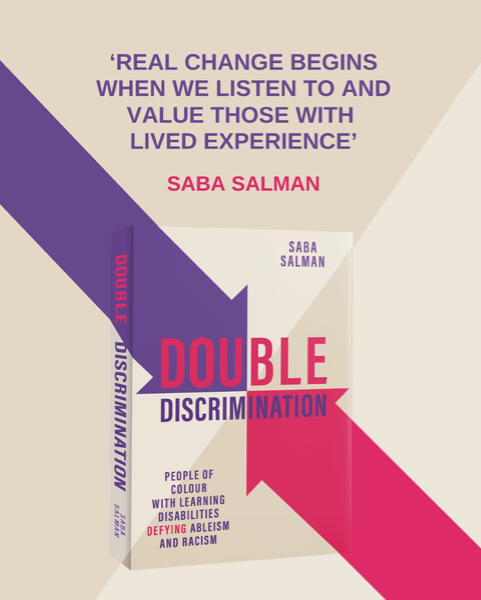
Double Discrimination: Racism, ableism and people with learning disabilities

The Kent, Surrey & Sussex Learning Disability Community of Practice are pleased to host an online event to promote the work and writing of Saba Salman, Paul Christian and Sue Ledger.
This hour long webinar, in recognition of Black History Month, will focus on Saba’s new book, Double Discrimination alongside a focus from Paul and Sue on the importance of sharing intersectionality stories and the idea of intersectionality strength.
Please join us on Wednesday 7 October 2026 at 12-1pm, register via Eventbrite

Collecting Memories and Stories across Kent!

Do you know or support someone in Kent who has a learning disability, and would like to share their stories about love, relationships and the support they have received over the years?

This project is exploring how experiences of love, relationships and sexuality for people with learning disabilities have changed over time.
The research team would be keen to speak to people with learning disabilities, and people working in health or social care to hear their stories. They are keen that these stories and experiences are captured and not forgotten.
Please see attached flyer with contact details for more information.

NHS England publishes new guidance on community living for autistic people and people with a learning disability.

Published on 14 July, this guidance sets out the core components it expects local systems to deliver so that autistic people and people with a learning disability can live well in their communities. It covers three areas: Health & Wellbeing, Education & Training, Home & Living Well and sits ahead of expected changes to the Mental Health Act, which will place more emphasis on community-based support.

The guidance builds directly on two earlier documents: Building the Right Support (2015) and the 2017 Transforming Care Service Model. The underlying principles carry over largely unchanged: Support should be person-centred, co-produced with people who have lived experience, needs-led rather than diagnosis driven, and delivered in a joined-up way across health, education, housing and social care. What’s asked of local systems is to review their existing support offers, identify gaps against local population need, and align commissioning accordingly, using tools such as Joint Strategic Needs Assessment. NHS England has said further, more detailed service specifications will follow, covering accommodation-based alternatives to hospital, enhanced support for autistic adults, children and young people with a learning disability.
For context locally, this sits alongside the RCN’s recent UK wide review of learning disability nursing, shared on this site last month, which sets out current workforce pressures in the field, and the ongoing work of the South East RNLD Workforce & Education Community of Practice. Readers interested in how community-based delivery and workforce capacity relate to one another may want to look at both documents together. The full guidance is available here:

https://www.england.nhs.uk/long-read/supporting-autistic-people-and-people-with-a-learning-disability-to-live-well-in-their-communities/ 

Launch of new report on transitions for young people with learning disabilities

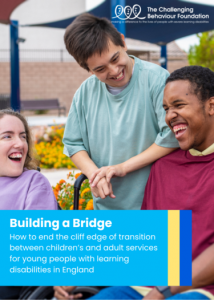
The Challenging Behaviour Foundation (CBF) have launched a new report, ‘Building a Bridge: How to end the cliff edge of transition between children’s and adult services for young people with learning disabilities in England’ bringing together family experiences with research about the issues with transition, and steps to address these. The report includes examples of how transitions can work successfully and five recommendations to improve experiences for people with learning disabilities and their families.

Transition to Adulthood – Challenging Behaviour Foundation